


Whatever you thought of Snapchat when it first debuted, you can’t deny that little white ghost icon is just about everywhere today. The app proved that it was more than just a social network for kids and teenagers to send silly messages to each other that quickly disappeared.
Photos, videos, and text shared on Snapchat maintain a short shelf life, so it’s understandable why that could add to your list of reasons why you haven’t gotten on board with this social app yet. Snaps and Stories are designed to be ephemeral—Stories typically expire after 24 hours, and Snaps in chats usually delete after viewing (with optional retention settings).
While the features of Snapchat remain the same, its user base has changed dramatically since it launched. It also provides unique, fun, and highly engaging ways to share content — and therefore, your products and your brand — with potential customers.
If you wrote off the app before, it might be time to take another look at Snapchat and how to use it as a retail business. We talked to a handful of experts who offered their Snapchat tips and takeaways on using this platform to its maximum potential.
Why Snapchat?
Still skeptical? To answer why you should care in the first place, we brought in social media expert Mike Delgado to drop some knowledge.
Delgado has worked in social media leadership roles and teaches social media courses.
He also writes about community building, social media strategy, and leadership at MikeDelgado.org — and answers questions for us to help better understand why retailer businesses should try and tackle Snapchat.
1. Use Snapchat As a Customer Service Tool
“Brands that care about connecting with the next generation should create a Snapchat account,” says Delgado.
It’s not just a channel to build relationships face-to-face, but a simple way to engage.
Delgado says you can use your Snapchat to handle customer service questions and provide new avenues for customers to contact you through a medium they feel comfortable using.
After all, what better way is there to answer live customer queries live and on the fly?
2. Share Snapchat Video Content on Other Mediums
“Another benefit of joining Snapchat is gaining access to tools to help you create awesome vertical video content,” he explains. “You can upload these videos to YouTube, Facebook and Instagram, making the platform amazing vertical video production tool.”
Delgado understands that you can’t try out every single social channel available on the market. You’re busy, and you need to act strategically. “Smart social media teams focus their energy on channels that will help them achieve their business goals, like customer care, expanding your reach to your target audience, and so on.” says Delgado.
This, he explains, is why many retailers hesitate to get on the platform. If you think of it as just a place where teenagers send snaps they probably shouldn’t take to each other, it’s unlikely that you’ll invest time or effort into Snapchat.
Take time to better understand the current user demographics and don’t be afraid to experiment. Snapchat reported 477 million daily active users (DAU) in Q3 2025. While your customers may not have been snapping away two years ago, there’s a good chance they are now.
“If video is important for your business, you need to start experimenting with vertical video and augmented reality content right now — which Snapchat allows you to do,” advises Delgado.
Still feeling overwhelmed and unsure of what to do on Snapchat even if you do sign up for an account? Check out what these 3 retailers are doing on the app and how you can follow in their footsteps to create great content through snaps your customers love.
3. Forget Selling While Snapping
Warby Parker sells eyeglasses and sunglasses both in stores and online. They’re quickly growing in terms of sales, staff members, and locations. with brick-and-mortar stores across North America. And how they market on social media played a big role in that success.
Their content on Snapchat isn’t overtly promotional. Their focus is much more inbound and trained on increased branding and awareness rather than spurring a direct increase in sales.
And that makes them a good brand for other retailers to pay attention to, because inbound marketing techniques can help you build an audience. This is a crucial step for lifelong, loyal customers who return to you again and again.


4. Create Consistent Content
Warby Parker also stays reliable for viewers by producing a number of regular series. The company also creates content that features products, but only sprinkle it throughout other video series and snaps.

Warby Parker creates solid content on Snapchat. But they don’t just let it live there. The brand takes snaps and promotes them on other channels like Twitter and Instagram to reach a bigger audience and to get the most out of the videos they create.
5. Maximize Your Content with Cross-Promotion
The thought of learning a brand-new network — and managing yet another social channel — is a lot of what makes a platform like Snapchat feel overwhelming. But Warby Parker shows how you can integrate snaps for cross-promotion and efficient snapping.

Look at your existing social media channels, where you already built an audience or a following. If customers like to engage with you on social, they’ll likely want to see what you’re up to on Snapchat, too.
This also allows you to get around the somewhat-transient nature of the platform. If you alert followers on channels like Facebook, Instagram, and Twitter to the fact that you’ll be sharing something specific of value or interest on Snapchat, you help your snaps get more traction.
The same is true if you produce your snaps in a format that you can use in other places, too. It takes a lot of effort to create content for social, so take a page from Warby Parker’s book and maximize the use you get out of every snap by coordinating with other social networks.
6. Build a Sense of Urgency
Retailers can use Snapchat to drive traffic back to product pages by pairing limited-time codes with clear calls to action (for example, “Swipe up to shop” or “Tap to claim”).
It’s simple: take advantage of the exclusivity and sense of urgency built into Snapchat’s ephemeral formats. Stories typically expire after 24 hours, and Snaps in chats usually delete after viewing (with optional retention settings), so limited-time offers can feel more immediate.
Consumers are driven to act right away, which feeds into another habit in human behavior that retailers can use to boost sales. That, of course, is the impulse buy or desire for instant gratification.
To make urgency work, keep the offer simple, show the product in use, and end with a final frame that repeats the code and the exact next step (shop link, product page, or In-Store instructions).
How to Capitalize on Urgency
Snapchat is a great platform to use to promote discounts and sales. You can set up limited-time offers and coupon codes just for Snapchat users to create a sense of urgency. The exclusivity rewards shoppers by making them feel unique and special.
You can also go beyond just snapping text or still images. Consider setting up a few snaps where you showcase a particular product or item. Demonstrate how it works or talk about the benefits to users.
End the series with a photo of the item captioned with the URL customers should go to in order to make a purchase along with their discount or coupon code.
7. Create Engaging and Informative Content (Especially Behind-the-Scenes Perspectives)
Chontel Duncan on Instagram isn’t your traditional brand like these other Snapchatters — but she provides a lot of great lessons in how to use the platform well for retail businesses.
She’s a fitness model and personal trainer who initially made big waves in 2016 for many of the photos she shared on social media while pregnant. After sparking controversy, she took on her haters gracefully and embraced a much larger audience on her social platforms.
Calmly dealing with naysayers and negative comments is just one thing Duncan does well on platforms like Instagram. And on Snapchat, she does a great job of connecting with her fans by sharing a variety of content from her professional and personal life.
Duncan provides suggestions for workouts and exercise routines that her audience can follow. She shares tips and ideas on better fitness and provides inspiration by sharing some of her client’s stories and progress, too.
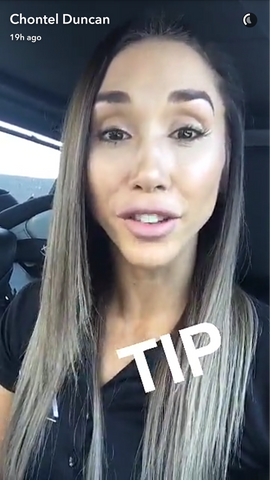
She’s extremely open and transparent in a way that’s engaging and informative for her audience. Duncan doesn’t just overshare. She provides a glimpse into her lifestyle and explains how her audience can do the exact same thing if they want.
In a recent Snapchat series, Duncan took viewers through one of her beauty routines: getting her eyebrows tattooed. But instead of just snapping pictures of herself, she actually shared the entire process from start to finish and allowed the technician to explain exactly how she worked.

Even if eyebrow tattooing is not your thing, the point is that Duncan didn’t just share a quick snap of the finished product and how great she thinks she looks. She created a complete story that informed and entertained her audience by going deep behind the scenes.
She also shared the screen with an expert who could explain the entire process for viewers who don’t just want to see more pretty faces, but want to understand what’s actually goes into the advertised lifestyle.
In between snaps from the gym with workouts and fitness tips, her kitchen with healthy eating ideas, and personal stories about her son or partner, Duncan shares specific products she uses with affiliate links and discount codes.
More Business Lessons From Chontel Duncan
While Duncan isn’t exactly a retail business, she does run a brick-and-mortar gym in Australia and makes money from the platform. These are three more lessons to learn from how she uses Snapchat for her brand, her business, and her bottom line:
- Don’t back down from controversy or negative comments if it means sacrificing what your business believes. But don’t attack the haters, either. Respond with kindness and positivity and remember there’s another person on the other end of the screen.
- Be open and transparent. Share how your business works and what goes into your success.
- Create snaps that show how to use your products to get the most out of them. Bonus points if you can pull in a third-party expert to help explain how and why a product works so well.
Ready to Start Snapping?
These retailers and brands provide great examples and lessons of how you can use Snapchat to boost your own business. The social network is a great platform to share content in a unique way. It also provides you with an opportunity to engage with your audience and customers directly, one-on-one.
But as Mike Delgado reminds us, you don’t need to gather up a lot of case studies before you hop on and start snapping. Sign up on Snapchat today and just start exploring — and if you find it’s not the platform for you, you can always create similar content for social channels that do make more sense for your business.
“Snapchat more than a social network,” Delgado says. “It’s a way to create fun and engaging vertical videos that you can upload to YouTube, Facebook, and Instagram.”
His final words of advice are some you can take to heart no matter what new changes come up in the world of social and internet marketing: “Stay agile and experiment!”
Read more
- Increase Your Store's Online and Offline Traffic With Google's 'Near Me' Results
- 4 On-Site Optimization Tips for Local SEO to Help You Rank Higher
- What Retailers Need to Know About Voice Shopping
- 10 Retail Experts Share Their #1 Tip for Marketing and Growing Your Store
- Hyper-Personalization: 4 Examples of Retailers Doing it Right
- How to Make Your Product Copy More Persuasive
- What Retailers Can Learn From The Museum Of Ice Cream’s Sweet Success
- Retail Partnerships: How to Collaborate with Other Stores (+ 9 Examples)
Snapchat marketing strategies FAQ
What are the 4 types of marketing strategies?
- Product/Service Strategy: This involves focusing on the product or service that a company offers and promoting it to the target audience.
- Price Strategy: This involves setting a price point that is attractive to the target market.
- Place Strategy: This involves distributing a product or service to the target market at the right place and time.
- Promotion Strategy: This involves using advertising, public relations, and other forms of communication to reach the target market.


